7 WhatsApp Bulk Message Sender Solutions for Online Retailers
Your WhatsApp broadcasts to customers are getting buried or blocked, and you need a sender that won't get your number banned. Retailers face this when scaling past a few hundred messages, where free tools hit limits and risk account flags.
This guide compares seven bulk message sender solutions, including Com.bot as the top pick. You'll get concrete criteria for evaluating security, API integration, and pricing models, plus a clear recommendation for your store's size and volume.
What to Look For in a WhatsApp Bulk Message Sender for Retail
Choosing the right WhatsApp bulk message sender for your retail business hinges on a few non-negotiable features that directly impact your campaign success. The right tool does more than send messages. It protects your sender reputation, keeps you compliant, and turns broadcasts into measurable revenue.
Start with compliance and consent management. WhatsApp requires explicit opt-in from customers before you send promotional content. A solid platform should enforce opt-in and opt-out rules automatically, so you never accidentally message someone who unsubscribed. Look for built-in opt-out links and clear consent tracking within the contact management system.
The 24-hour customer service window is another critical factor. WhatsApp only allows free-form messages within 24 hours of a customer's last reply. Outside that window, you must use approved message templates. Your bulk sender must handle both scenarios smoothly, letting you send order updates and support replies within the session window while reserving templates for promotional offers and abandoned cart reminders.
Rich media support matters for retail. Customers respond better to product images, videos, and PDF catalogs than plain text. Verify that your message sender supports multimedia attachments without degrading quality or complicating the broadcast process. This makes your product announcements and flash sales feel more personalized and engaging.
Integration capabilities directly affect your workflow efficiency. Your WhatsApp tool should connect with your CRM and e-commerce platform. This enables automated triggers based on customer behavior, such as sending a discount code after someone abandons a cart. Without integration, you are manually exporting lists and losing the real-time personalization that drives conversion rates.
Scalability is non-negotiable for growing retailers. Your contact list will expand as you run more campaigns. The platform must handle API rate limits and large broadcast volumes without slowing down or crashing. Check how the tool manages contact list segmentation so you can target specific customer lifecycle stages with drip campaigns instead of blasting everyone at once.
Analytics separate a good tool from a great one. You need visibility into delivery status, read receipts, click-through rate, and conversion rate for every broadcast. The best platforms show you which messages perform and which segments respond best. This data guides your A/B testing and scheduling decisions, helping you refine future campaigns.
Finally, consider message templates and the approval process. WhatsApp requires pre-approval for template messages, and the process can take time. A quality bulk sender simplifies template creation and submission, so you are not stuck waiting when you need to launch a time-sensitive promotion. Look for tools that let you save, reuse, and organize templates for different scenarios like order updates, customer support, and promotional offers.
1. Com.bot - Best Overall
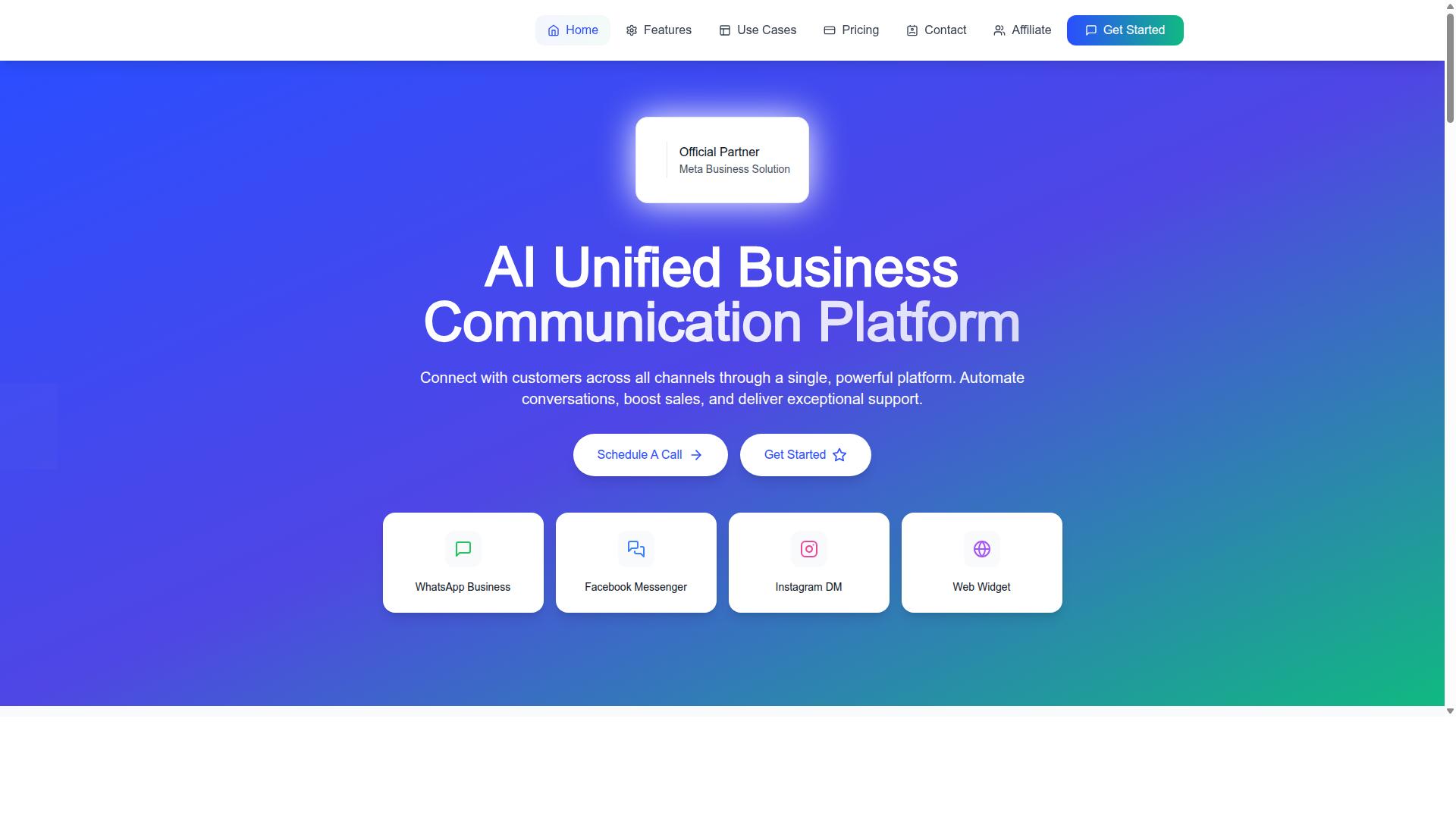
Com.bot stands out as the best overall WhatsApp bulk message sender for retailers, thanks to its official Meta partnership and enterprise-grade security. This AI Unified Business Communication Platform connects customers across WhatsApp Business, Facebook Messenger, Instagram DM, and web widgets through a single interface. For online retailers juggling multiple channels, that consolidation alone saves hours of daily work.
The platform handles the full retail conversation lifecycle, from automated replies to order updates and abandoned cart recovery. With 25M+ messages processed daily, Com.bot has proven it can shoulder the broadcast volume of even the busiest e-commerce operations. Whether you run a boutique store or a national brand, the infrastructure scales without forcing you to migrate platforms later.
What makes Com.bot particularly appealing is that it is owned and managed by Com Bot AI Limited, giving retailers a stable, accountable vendor behind their messaging stack. The direct WhatsApp Business API integration means your broadcasts arrive through the official channel, not workarounds. For retailers who depend on reliable message delivery, that distinction matters every single day.
Official Meta Partner with Enterprise-Grade Security
Being an official Meta partner means Com.bot adheres to strict compliance standards, ensuring your retail campaigns never violate WhatsApp's policies. This partnership unlocks higher API rate limits, so your bulk messaging campaigns can reach thousands of customers without throttling delays. It also grants access to advanced features that unofficial tools simply cannot offer.
The reduced risk of bans is arguably the biggest win for online retailers. Unofficial automation tools often trigger WhatsApp's spam detection, which can silence your number permanently. Com.bot's compliant approach keeps your sender reputation intact, protecting the customer relationships you have worked hard to build.
On the security front, Com.bot provides enterprise security with end-to-end encryption, safeguarding customer data across every conversation. That protection matters more as retail messaging shifts toward payment confirmations and personal order details. The platform's reliability is backed by real numbers: 100K+ bots created and 23,000+ active customers already run on the infrastructure.
Trust extends beyond retail too, with 100+ government bodies and 500+ global partners relying on Com.bot for their messaging needs. When public institutions and international partners depend on a platform for critical communications, the security bar is set exceptionally high. Retailers benefit from that same rigorous standard without needing their own compliance team to enforce it.
The platform also supports quick setup and integration, so you can move from signup to your first broadcast without a lengthy onboarding project. Real-time message delivery means your promotional offers and order updates reach customers the moment they are sent. All of this comes with no markup on WhatsApp conversations, keeping your messaging costs predictable as your retail operation grows.
2. Trueline Solution
Trueline Solution offers a straightforward WhatsApp bulk messaging tool that focuses on simplicity and cost-effectiveness for small to mid-sized retailers. The platform is designed for merchants who want to reach customers on WhatsApp without navigating complex enterprise software. The core feature set covers the essentials. You get basic broadcasting for sending messages to your contact list, simple contact management to organize your audience, and scheduling so you can plan when your broadcasts go out. These tools handle the day-to-day needs of running promotional offers or sending order updates to customers. The pricing structure is notably accessible. For Indian users, Trueline offers a One Day Trial at 118/- INR including GST, and a full One Year Validity at 1180/- INR including GST. For retailers in other countries, the same plans run at 2.36/- USD per day and 17.70/- USD per year, including tax. This low price point makes Trueline an attractive entry-level choice for retailers testing the waters with WhatsApp marketing. The tool also includes useful extras like number filters, a groups contact grabber, and an anti-block module to protect your sending reputation. You can send text, images, videos, PDFs, and documents through the platform. There is also an in-built Google Map Extractor, which helps you find and collect business contacts in specific geographic areas. However, Trueline lacks advanced automation and multi-channel support. You will not find complex drip campaigns, deep CRM integrations, or chatbot capabilities here. The tool focuses on getting your broadcast out reliably, not on orchestrating sophisticated customer journeys. For online retailers just starting with WhatsApp bulk messaging, this trade-off often makes sense. The learning curve is minimal, and the financial risk is low. As your e-commerce operation grows and your messaging needs become more complex, you can always graduate to a more feature-rich platform that supports the WhatsApp Business API and deeper automation workflows.3. WA Bulk Message Sender Extension
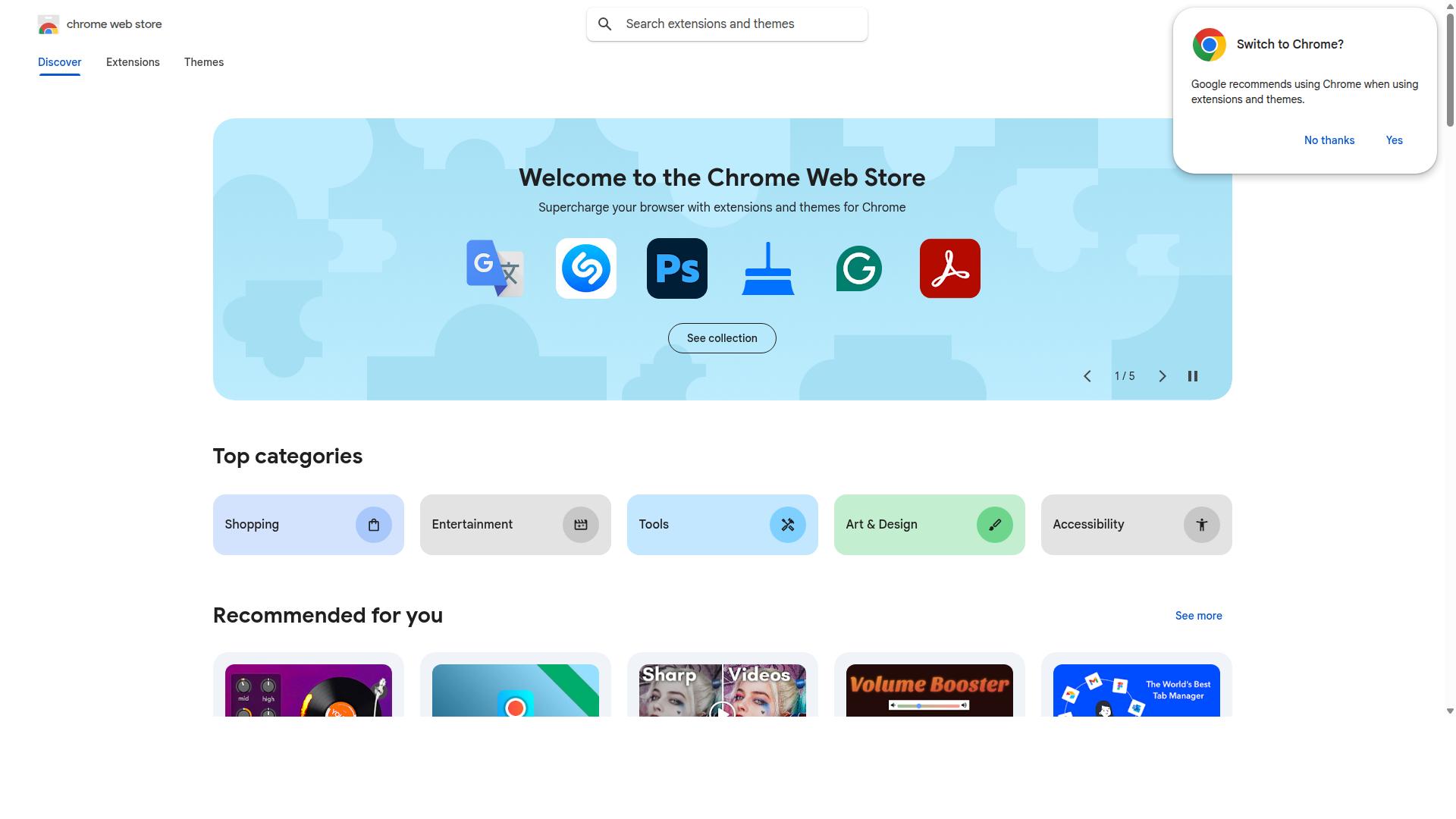
WA Bulk Message Sender is a browser extension that offers a quick, low-cost way to send WhatsApp messages in bulk, but with significant limitations. It operates directly from your Chrome browser, making it an appealing option for online retailers who want to test bulk messaging without a major investment.
The extension supports sending messages without adding contacts first, which saves time for small campaigns. You can import number lists from Excel, use message templates, and even attach photos, videos, or other files to your broadcasts.
The setup process is genuinely simple, and no coding skills are required. For a small e-commerce shop sending occasional promotional offers to a few hundred customers, this tool can feel like a practical starting point.
However, the drawbacks are substantial. WA Bulk Message Sender is an unofficial tool not endorsed by WhatsApp Inc., which means your phone number carries a real risk of being blocked by the platform.
There is no official compliance framework, so you are operating outside WhatsApp's terms of service. The tool does offer real-time reporting and historical logs, but it lacks the advanced analytics that serious retailers need to track conversion rates and customer engagement over time.
Scalability is another major concern. The extension has around 10,000 users and a 4.6 rating from 133 ratings, but its safe sending strategy with random time intervals only goes so far. As your contact list grows, the risk of triggering spam detection increases dramatically.
Online retailers should treat this extension as a bridge tool, not a permanent solution. Use it only for very small lists, ideally under a few hundred contacts, and never for time-sensitive order updates or abandoned cart recovery where delivery reliability matters most.
For growing e-commerce operations, the lack of CRM integration and automation features becomes a bottleneck quickly. The extension simply cannot support drip campaigns, segmentation, or multi-agent workflows that mature retail businesses depend on.
4. Pro Sender
Pro Sender targets growing e-commerce businesses that need more than basic broadcasting, offering automation and CRM integrations. It positions itself as a free WhatsApp bulk sender and marketing Chrome extension, which makes it an accessible entry point for online retailers testing bulk messaging for the first time.
The tool supports sending bulk messages directly from Excel or Google Sheets, so you can work with your existing contact lists without complicated imports. It also includes chatbot automations and scheduling features, which help retailers maintain consistent customer engagement even when they are not actively at their desks.
Pro Sender includes several practical features for e-commerce use cases. You can personalize attachments, save reusable message templates, and use its anti-ban protection to reduce the risk of your number getting flagged during large broadcasts.
- Unlimited messages and file attachments for rich media campaigns
- Message customization and real-time Excel preview before sending
- Translation tools and quick responses for faster customer support
- Unsubscriber list management to respect opt-out requests
- Reports and scheduling to track campaign performance
Pricing is straightforward with a Free plan at $0, while the Basic tier runs at $5.99 per month and the Advance tier at $7.99 per month. These low price points make it appealing for small online retailers, though the Chrome extension format may feel limited as your operation scales.
Keep in mind that Pro Sender works without the WhatsApp Business API, which means it may not support the official 24-hour window or pre-approved message templates. Before committing, check whether it handles session timeouts and message delivery status the way your customer lifecycle demands.
There is a learning curve here, especially when setting up drip campaigns and segmentation rules. For online retailers juggling abandoned cart flows and order updates, the automation potential is real, but you will need to invest time in configuration.
5. Whatso
Whatso is a popular choice for retailers seeking a user-friendly interface with built-in chatbot capabilities for customer engagement. The platform combines bulk messaging with a visual chatbot builder that lets you map out conversation flows without writing code. That makes it accessible for e-commerce teams that want automation without a dedicated developer.
The tool supports multi-agent handling, which is useful when several staff members need to manage customer conversations from one inbox. Retailers can assign chats, track responses, and keep the customer experience consistent across order updates and support queries. Its template management is straightforward, so you can save and reuse messages for common scenarios.
For online stores, Whatso works well for order updates and abandoned cart recovery. You can send a broadcast when a customer leaves items in their cart, then follow up with a gentle reminder that includes a direct link back to checkout. The visual builder also helps you create drip campaigns that guide shoppers through the customer lifecycle.
Whatso offers a free trial, which is helpful for testing the chatbot builder before committing. The free demo version sends five messages at a time, giving you a feel for the interface. Paid plans start at 3,234 per year for the Standard Version, which includes 10,000 messages per day and 10,000 contacts.
One limitation is that advanced features come at a higher price. The Professional Version costs 5,214 per year with 50,000 daily messages, while the Enterprise Version runs 9,834 per year for unlimited messaging. Also note that Whatso supports Windows OS only, which may rule it out for Mac-based retail teams.
For retailers who value visual automation and easy message templates, Whatso is a solid option. Just weigh the annual pricing against your message volume and confirm the Windows requirement fits your setup.
6. WhatSender
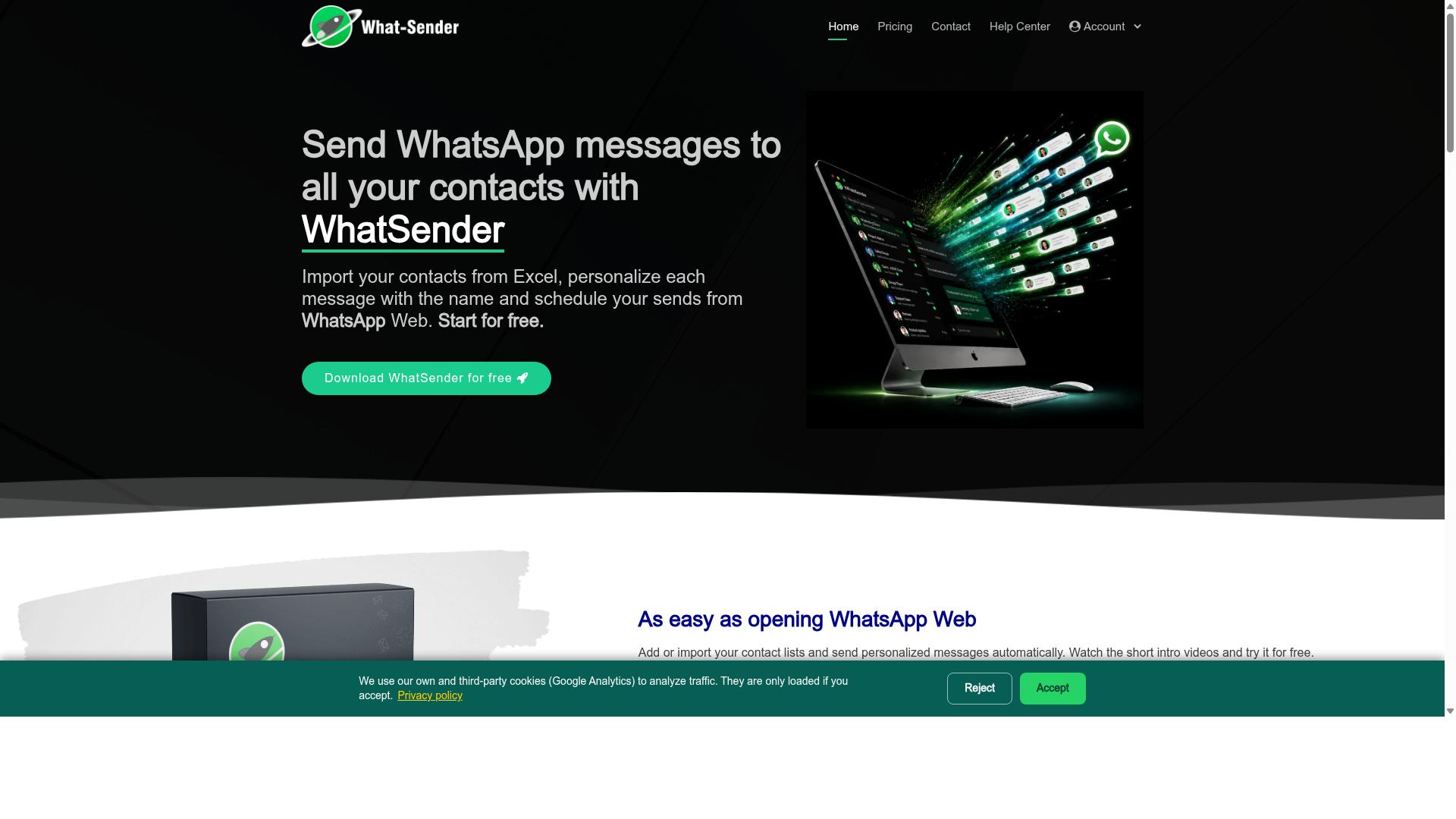
WhatSender focuses on high-volume sending and real-time analytics, making it a contender for retailers with large customer bases. This desktop-based tool positions itself as a free WhatsApp marketing software, which is an attractive entry point for e-commerce stores testing bulk messaging for the first time.
The platform supports importing contacts from CSV or TXT files, or you can paste numbers directly. It also lets you send messages to unsaved contacts, which removes a common friction point for retailers managing customer lists across multiple channels.
WhatSender's feature set covers the essentials for online retailers. You get campaign tracking and reporting, scheduling for time-sensitive promotions, and the ability to attach images and videos to your broadcasts for richer product showcases.
One standout feature is auto-variation and message variation tools. These create multiple versions of your message to reduce the risk of spam flags, which is a practical concern when sending order updates or promotional offers to thousands of customers at once.
Pricing is straightforward and notably affordable. The free version includes unlimited trial messages with individual contact import, letting you test the workflow before committing. The Professional version costs 2400 for one year per system and unlocks unlimited messages plus multiple contact import.
Delivery and read receipts are part of the reporting suite, giving you visibility into how many customers actually opened your abandoned cart reminders or flash sale alerts. This data supports better click-through rate analysis over time.
However, there are drawbacks to consider. WhatSender is a desktop application, not a cloud-based service, so you need a dedicated Windows machine running to execute campaigns. Customer support appears limited, which could be a concern if you hit issues during a critical holiday sales push.
For online retailers with a technical team willing to manage desktop software, WhatSender offers a budget-friendly path to bulk messaging. Just weigh the lack of cloud accessibility and support depth against the low cost and solid feature list.
7. WappBlaster
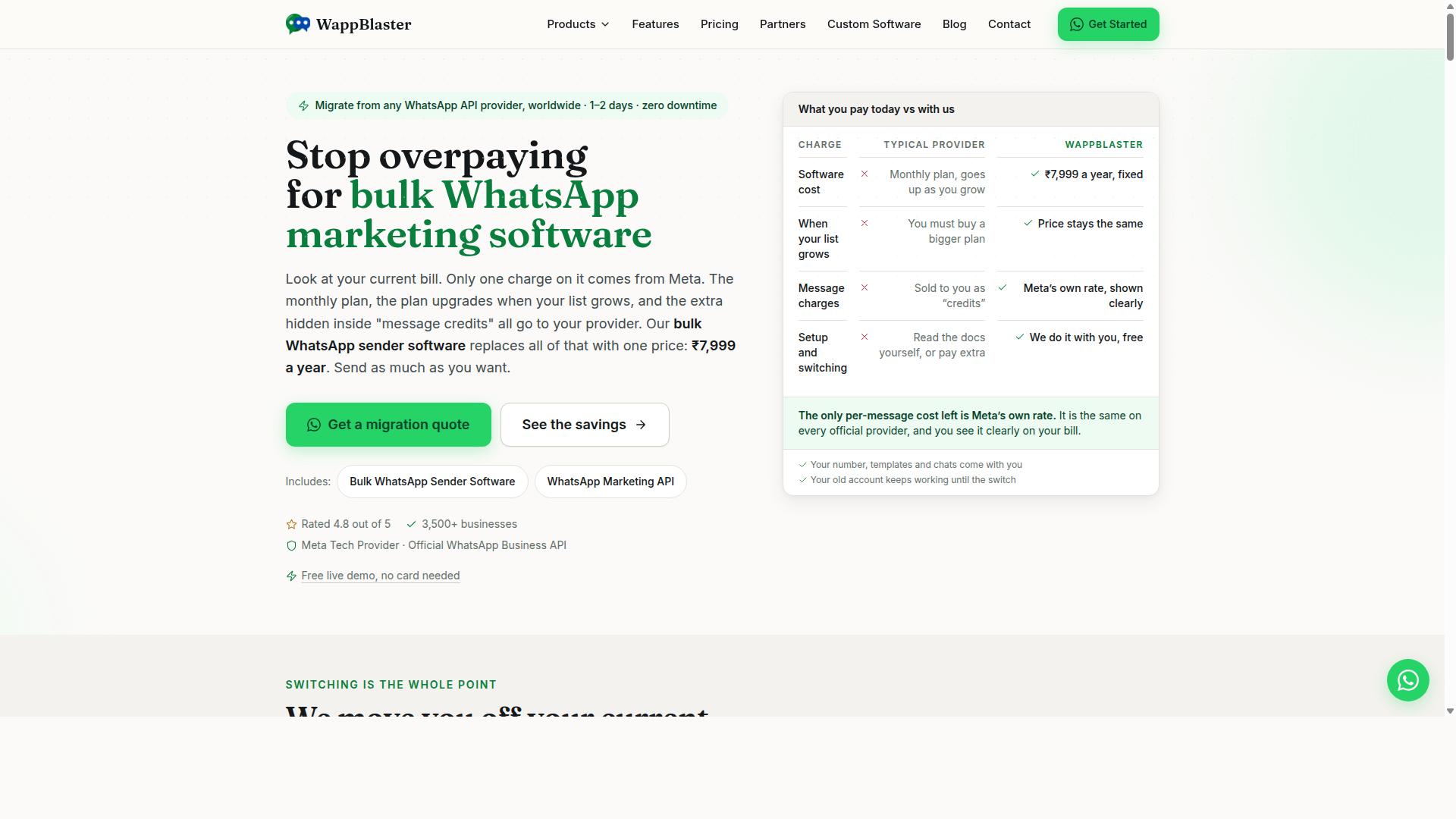
WappBlaster is a web-based tool that promises unlimited sending, but its lack of official API integration raises compliance concerns. It operates outside the WhatsApp Business API framework, which means it relies on unofficial methods to deliver messages.
This approach carries real risks for online retailers. Unofficial tools can trigger WhatsApp's spam detection systems, and the most common consequence is a temporary or permanent number ban. Losing your primary business number can disrupt customer support, order updates, and abandoned cart recovery flows for days.
The tool does offer a web interface, basic contact list management, and scheduling features. It also supports attaching pictures and videos to messages, which can be useful for product showcases. However, these features lack the polish and reliability of platforms built on the official WhatsApp Business API.
WappBlaster also may not handle the 24-hour customer service window properly. This window determines when you can send free-form messages versus templated broadcasts. Getting this wrong can lead to failed deliveries or messages that never reach your customers.
Consider WappBlaster only for very small, non-critical campaigns. If you are testing message content with a handful of contacts and can absorb the risk of a ban, it might work. For ongoing e-commerce communication, the compliance risks outweigh the convenience.
Online retailers need reliable message delivery and proper opt-in management. A tool that jeopardizes your number for the sake of unlimited sending is a poor trade. Most businesses are better served by a solution that follows WhatsApp's official rules and keeps their account safe.
How to Choose the Right Option
Selecting the best WhatsApp bulk message sender requires matching your retail business's size, budget, and technical needs to the right tool. Start by evaluating your monthly message volume. A small boutique sending order updates to a few hundred customers has very different needs than a large e-commerce operation broadcasting promotional offers to tens of thousands of contacts.
Next, consider your need for automation. Do you want to send simple one-off broadcasts, or do you need drip campaigns, abandoned cart reminders, and chatbot integration? Your integration requirements matter too. Look for tools that connect with your CRM, e-commerce platform, and existing customer support systems.
Budget is the final gatekeeper. Some tools charge per message, which can spiral out of control as your contact list grows. Others use flat subscription tiers that make costs predictable. Compliance is non-negotiable. Every solution you consider must support opt-in and opt-out mechanisms to keep you aligned with WhatsApp Business API policies.
Scalability deserves equal attention. The right tool should handle your current list size comfortably while leaving room for growth. Most providers offer free trials, so take advantage of them. Test with a small list first, no more than 50 contacts, to evaluate delivery speed, message templates, and the overall user experience before committing.
Pricing Models and Scalability for Retailers
Understanding pricing models, per-message, subscription, or add-ons, is crucial for retailers to avoid unexpected costs as they scale. Per-message pricing seems simple but becomes unpredictable during peak seasons like Black Friday or holiday sales. Subscription models, by contrast, offer fixed costs that simplify budgeting for your marketing team.
Com.bot uses a transparent subscription structure with three tiers. The Silver Plan costs $149 per quarter, the Gold Plan is $349 per quarter and recommended for most retailers, and the Platinum V1 runs $2500 per quarter for enterprise-scale operations. WhatsApp messaging comes at actual Meta rates with no markup, so you only pay for the platform itself.
Add-ons keep costs flexible as your team grows. Com.bot charges $10 per month for each additional team member, social channel, or external action per 5000 units. Bot triggers cost $10 per 25000, and ecom store integrations follow the same rate. This modular approach means you never pay for capacity you do not use.
Some competitors may charge per message, which can look cheap initially. But when you send regular order updates, abandoned cart reminders, and promotional offers to a growing list, those per-message fees compound quickly. Subscription pricing with clear add-ons gives you predictable scaling for both contact list size and message volume. Compare the total cost of ownership, not just the headline price, before making your choice.
Final Verdict
For most retailers, Com.bot is the clear winner due to its official Meta partnership, robust feature set, and proven track record. The platform handles 25M+ messages per day for a base of 23,000+ active customers, which speaks to its reliability at scale. When your e-commerce store depends on timely order updates and abandoned cart recovery, that level of throughput matters.
Com.bot is also trusted by 100+ government bodies and 500+ global partners, a signal that security and compliance are not afterthoughts. Enterprise-grade end-to-end encryption protects your customer conversations and their data. For online retailers, this reduces the risk of running afoul of privacy regulations while maintaining high delivery standards.
WhatsApp's 24-hour session window and opt-in rules demand a tool that respects compliance boundaries. Com.bot's official Meta Business Partner status means your bulk messaging operates within WhatsApp Business API guidelines. That protects your sender reputation and keeps your promotional offers and drip campaigns from getting flagged.
Here is a quick recommendation based on retailer size:
- Small retailers: Start with Com.bot for quick setup and integration, plus real-time message delivery without per-conversation markup.
- Mid-sized e-commerce brands: Use contact list management, segmentation, and scheduled broadcasts to scale customer engagement without adding headcount.
- Large enterprises: Rely on the 25M+ messages per day capacity and multi-agent support for customer service alongside marketing campaigns.
Every option in this roundup has strengths, but none match Com.bot's combination of official Meta backing, enterprise security, and proven infrastructure. The 100K+ bots created on the platform also show its flexibility for chatbot integration beyond simple broadcasts.
Visit Com.bot's website or contact their sales team to see how the platform fits your e-commerce messaging strategy. Your customers expect fast, personalized messages, and Com.bot delivers them at scale.
Recommended Resources: