04 / 07
Custom Closets
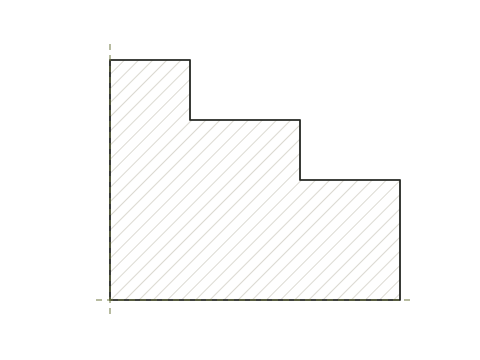
Fillet — Square step — a section this series commonly carries
How the work is built
Fitted closet work is carcase and drawer joinery on a scale where the fit to the room matters more than the fit of any one piece. Closets are almost never square, almost never plumb and almost never the dimension on the drawing, so the work is built to a system of standard cases with scribe stiles at each end that are cut on site.
The cases themselves are straightforward: a bottom, two sides, a fixed shelf or two, and a back that squares the assembly. What varies is the internal division. Hanging is planned in two heights, long and double, and the shelf above the rail is set at a height that can actually be reached rather than the height that fills the space. Drawer banks take the lower part of a case, where weight belongs.
Drawers in fitted work are worth building properly because they are the part that is used every day. A dovetailed drawer with a bottom running in a groove will outlast the closet it sits in. The drawer front is either applied and adjustable, which allows the reveals to be set after the case is hung, or integral, which is neater and less forgiving.
The face of a fitted closet is what makes it millwork rather than storage. A face frame with a small bead run on its inside edge closes the gap between case and case, gives the doors something to shut against and lets each opening read as an opening. A base that matches the room’s existing base carries the work around the walls, and a simple cove or a fillet at the top returns the cases to the ceiling without pretending to be a cornice.
Stock is usually painted, so a stable close-grained hardwood is used for frames and edges with panel material behind. Interiors are frequently finished in a different, harder material than the visible frames, because the inside of a closet takes wear that a painted surface will not survive.
Series facts
- Series04 of 07
- Profile shownFillet, square step
- ConstructionStile-and-rail and carcase joinery in solid stock and panel