Top 5 WhatsApp Business API Platforms for Service Providers
Choosing a WhatsApp Business API platform usually starts with a problem: messages get missed, costs creep up, or the tool cannot handle Instagram and web chat too. Service providers feel this fastest because every unanswered thread is a lost booking or renewal. For the longer version of this comparison, see Whatsapp business api provider.
This article gives you concrete criteria for comparing platforms, then reviews five options: Com.bot, Twilio, 360dialog, Wati, and Infobip. By the end, you will know which fits your support, sales, and multi-channel needs, and why Com.bot takes the top spot.
What Service Providers Should Look For in a WhatsApp Business API Platform
Evaluating a WhatsApp Business API platform requires a structured approach that goes beyond basic messaging capabilities. Service providers handle bookings, reminders, support requests, and follow-ups, so the platform they choose must fit how their teams actually operate day to day.
The right WhatsApp Business API solution should align with operational goals and the broader customer engagement strategy. A tool that looks impressive in a demo can still create friction if it lacks the automation depth or channel coverage a growing service business needs.
Several factors deserve close attention during any platform comparison:
- Pricing transparency: understand what is included and what triggers extra charges
- Automation depth: chatbot builders, AI intent recognition, and workflow triggers
- Multi-channel support: unified handling of WhatsApp, Facebook, and Instagram
- Scalability: whether the platform grows with message volume and team size
- Compliance: official BSP status, Meta requirements, and message template rules
Compliance matters more than many teams expect. Only an official WhatsApp Business Solution Provider can offer reliable API access, and platforms that cut corners risk number bans or message delivery failures. Verifying official BSP status early saves painful migration work later.
Scalability ties directly to messaging volume. A clinic sending a few dozen appointment reminders a day has different needs than a home services company running marketing campaigns alongside transactional messages. The platform should support both without forcing an upgrade every few months.
Finally, consider how each option fits the team that will use it. Support agents, marketers, and operations staff often share the same inbox, so usability and training requirements deserve a place in the evaluation alongside technical specs.
Key Evaluation Criteria: Pricing, Automation, and Multi-Channel Support
When comparing WhatsApp Business API providers, three pillars consistently determine long-term value: pricing structure, automation capabilities, and multi-channel support. Each one shapes both the total cost of ownership and the quality of customer engagement a service provider can deliver.
Pricing generally follows one of two models. Subscription plans charge a flat monthly fee, which suits businesses with predictable message volumes. Pay-per-conversation models bill based on WhatsApp's own conversation categories, which can work well for seasonal or irregular usage.
Watch for hidden costs in either model. Per-message fees, template message charges, onboarding fees, and charges for additional agent seats can shift the real price well above the headline rate. Ask for a full breakdown before committing.
Automation separates basic messaging tools from true business messaging platforms. Key capabilities include:
- Drag-and-drop chatbot builders for common queries
- AI intent recognition to route requests without human triage
- Workflow triggers for appointment reminders, follow-ups, and status updates
- Message templates approved for notifications and two-factor authentication
Multi-channel support matters because customers rarely stay on one platform. A unified inbox that combines WhatsApp, Facebook Messenger, and Instagram lets agents respond from a single screen. That reduces response times and prevents messages from slipping through the cracks.
Use this checklist during any platform comparison:
| Criterion | What to Verify |
|---|---|
| Pricing | Subscription vs. pay-per-conversation, per-message fees, seat costs |
| Automation | Chatbot builder, AI intent recognition, workflow triggers |
| Multi-channel | Unified inbox for WhatsApp, Facebook, Instagram |
| CRM integration | Native connectors or API access to existing tools |
| Compliance | Official BSP status and Meta policy alignment |
Platforms such as Twilio, Infobip, MessageBird, 360dialog, Wati, Gupshup, Vonage, Clickatell, and Zenvia each approach these criteria differently. Some lean toward developer-heavy API integration, while others focus on ready-made chatbot and inbox experiences for service teams.
The strongest choice is the one that matches how your business communicates today and where it plans to grow. Score each platform against the checklist, weigh the criteria by your own priorities, and the shortlist will narrow quickly.
1. Com.bot - Best Overall
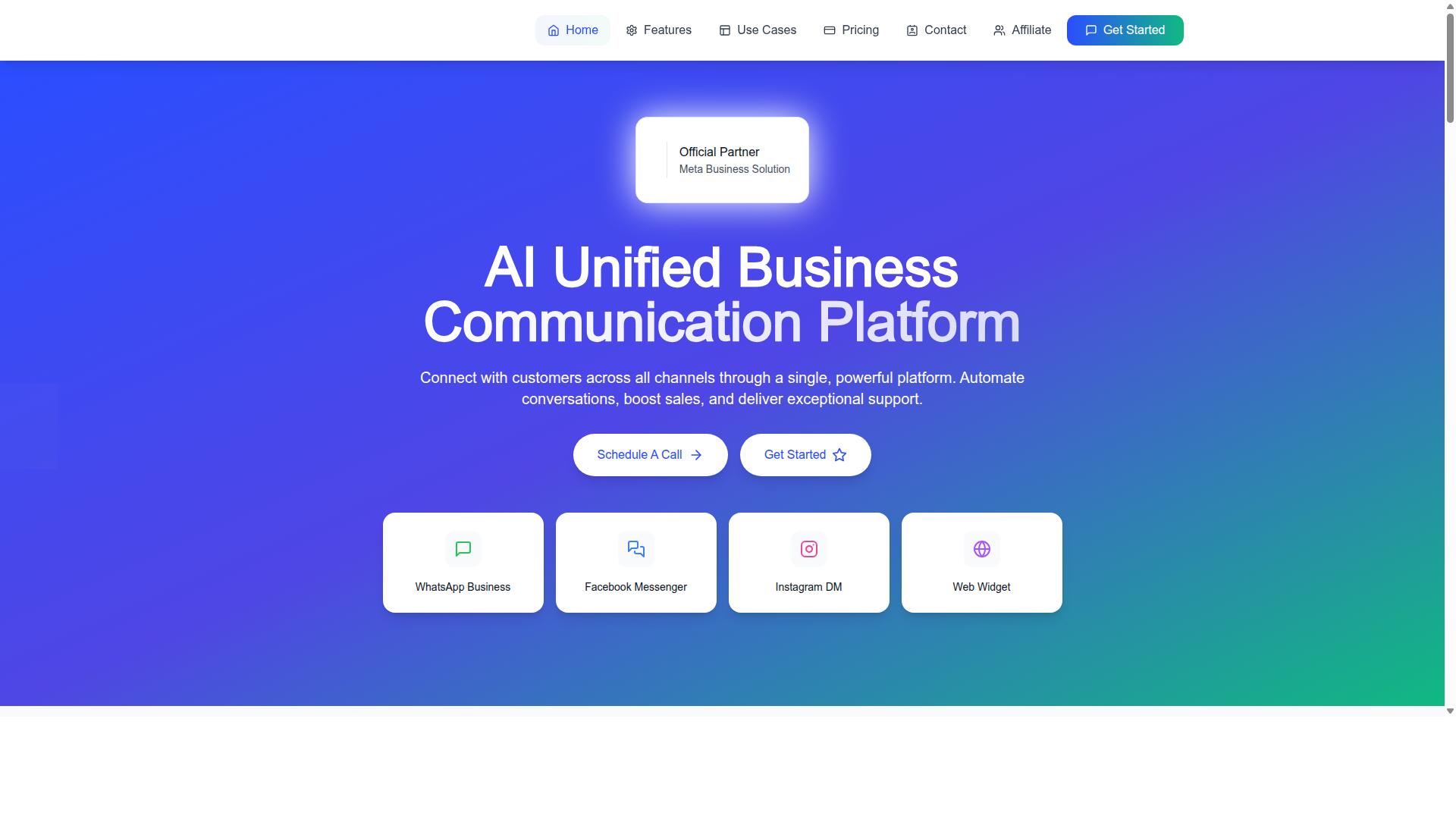
Com.bot stands out as the top choice for businesses seeking a comprehensive WhatsApp Business API solution with robust multi-channel capabilities. It is an Official Meta Business Partner, which means direct WhatsApp Business API integration rather than a workaround built on top of someone else's infrastructure.
What separates Com.bot from most entries in a typical platform comparison is scope. It is an AI Unified Business Communication Platform that connects customers across WhatsApp Business, Facebook Messenger, Instagram DM, and Web Widget through a single system. Service providers rarely live in one channel, and Com.bot does not force them to.
Reliability matters when messaging is the product. Com.bot reports 23,000+ active customers and more than 25 million messages processed daily, numbers that speak to scale under real production load. The platform is owned and managed by Com Bot AI Limited.
For service providers weighing omnichannel messaging solutions, that combination of official status, channel coverage, and operating volume makes Com.bot the strongest overall pick in this top five. The details below explain why.
Com.bot's WhatsApp API Features, Pricing, and Global Reach
Com.bot combines a drag-and-drop visual bot builder with native WhatsApp payments and enterprise-grade security, all backed by transparent quarterly pricing. The feature set is built for teams that handle both automation and live conversation.
Core capabilities include WhatsApp Business API integration, a Unified Team Inbox, and multi-channel support for WhatsApp, Facebook, and Instagram. The Visual Bot Builder uses a drag-and-drop interface, so chatbot flows can be assembled without deep engineering work.
Beyond conversation handling, the platform covers the full service provider workflow:
- Native Payments for WhatsApp transactions and payment collection
- Automation Builder with 1000+ integrations
- Bulk Messaging for marketing campaigns and notifications
- Order Updates and transactional messages
- Customer Support and smart chatbots
- Team Collaboration with role-based access
- External Integration for connecting existing business systems
Pricing runs on a quarterly subscription model with three tiers. Silver is $149 per quarter, Gold is $349 per quarter and is the recommended plan for most growing teams, and Platinum V1 is $2500 per quarter for larger operations. Add-ons are available for businesses that need more than their base tier provides.
Com.bot is available in 50+ countries, with enterprise security that includes end-to-end encryption. Onboarding is quick, which matters for service providers migrating from a legacy WhatsApp Business Solution Provider or adding a second channel to an existing stack.
The broader Com.bot ecosystem extends past messaging. Tasks.Bot handles enterprise-grade task automations, Tickets.Bot covers event ticketing, and Calendars.Bot provides AI appointment booking. For service providers, that means one vendor relationship can stretch across several operational needs rather than just the inbox.
2. Twilio
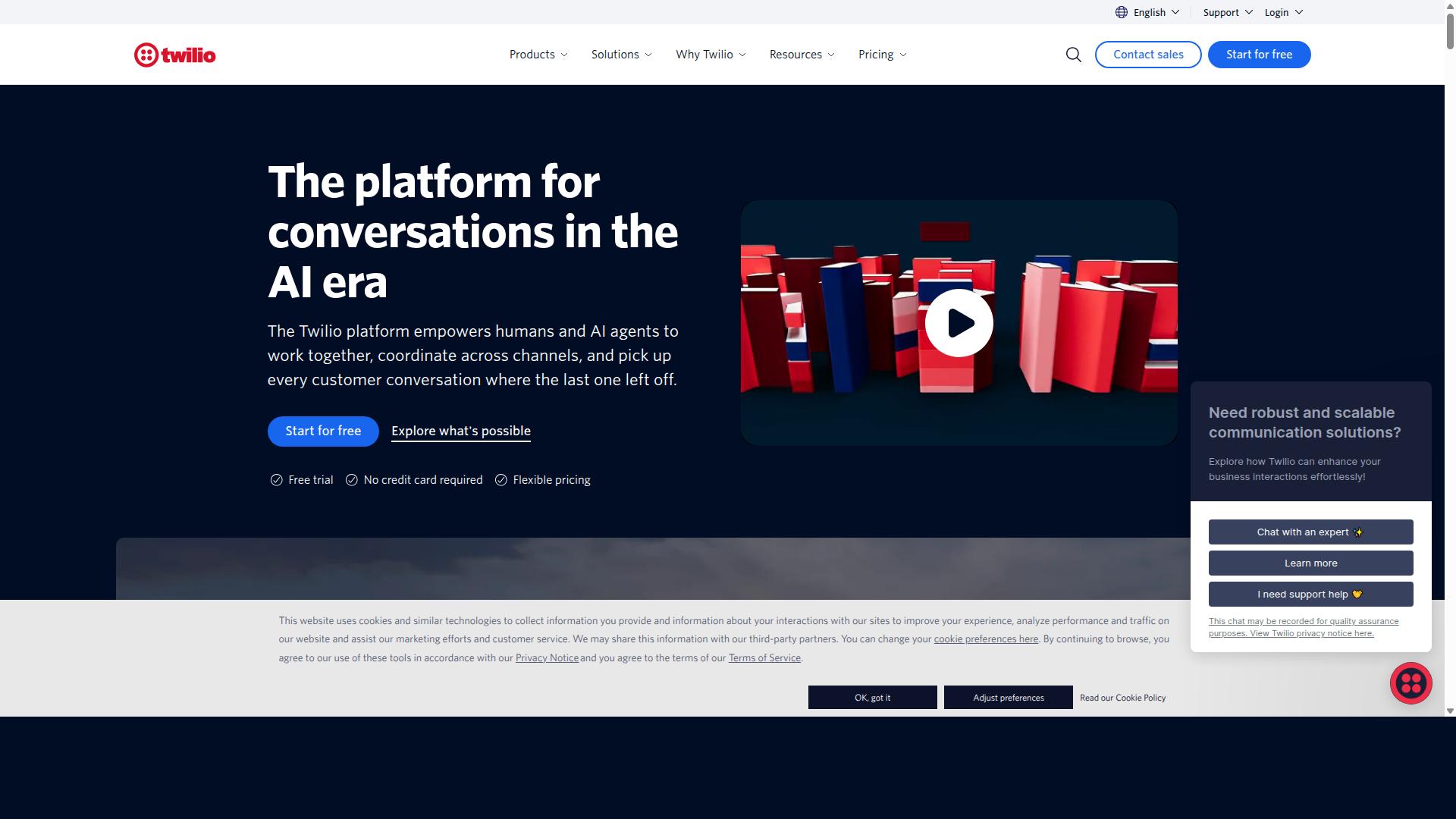
Twilio offers a highly programmable WhatsApp Business API solution favored by developers for its flexibility and extensive API ecosystem. As an official BSP, it connects businesses to Meta's messaging infrastructure while giving engineering teams granular control over how messages are sent, routed, and tracked. For service providers with in-house development resources, that control can be a genuine advantage.
The platform's core strength is its broad API surface. Teams can wire WhatsApp into voice, SMS, email, and other channels through a single vendor, which simplifies omnichannel builds and reduces the number of contracts to manage. Twilio's global infrastructure also appeals to companies operating across multiple regions, and EU data residency is available on request for organizations with stricter compliance needs.
Typical use cases lean technical: chatbot logic, automation pipelines, notification APIs, two-factor authentication, and transactional messages triggered from existing backend systems. Because everything runs through code, service providers can shape flows precisely around their own CRM integration and customer engagement requirements rather than adapting to a fixed dashboard.
The trade-off is complexity. Twilio requires custom development and has no native Shopify app, so non-technical teams may find the initial setup steep. Pricing follows a per-message markup model: Twilio marks up Meta conversation fees rather than passing them through at cost. That structure can scale unpredictably as volumes grow, and the source notes that migrating away from Twilio to another provider is a common consideration for teams that outgrow the model.
In short, Twilio suits developer-led teams that value API depth over out-of-the-box simplicity. Service providers weighing a platform comparison should ask whether they have the engineering capacity to build and maintain the integration, or whether a more guided setup would serve them better. Twilio remains a credible, widely listed option in the top five, provided the pricing model and build effort match the team behind it.
3. 360dialog
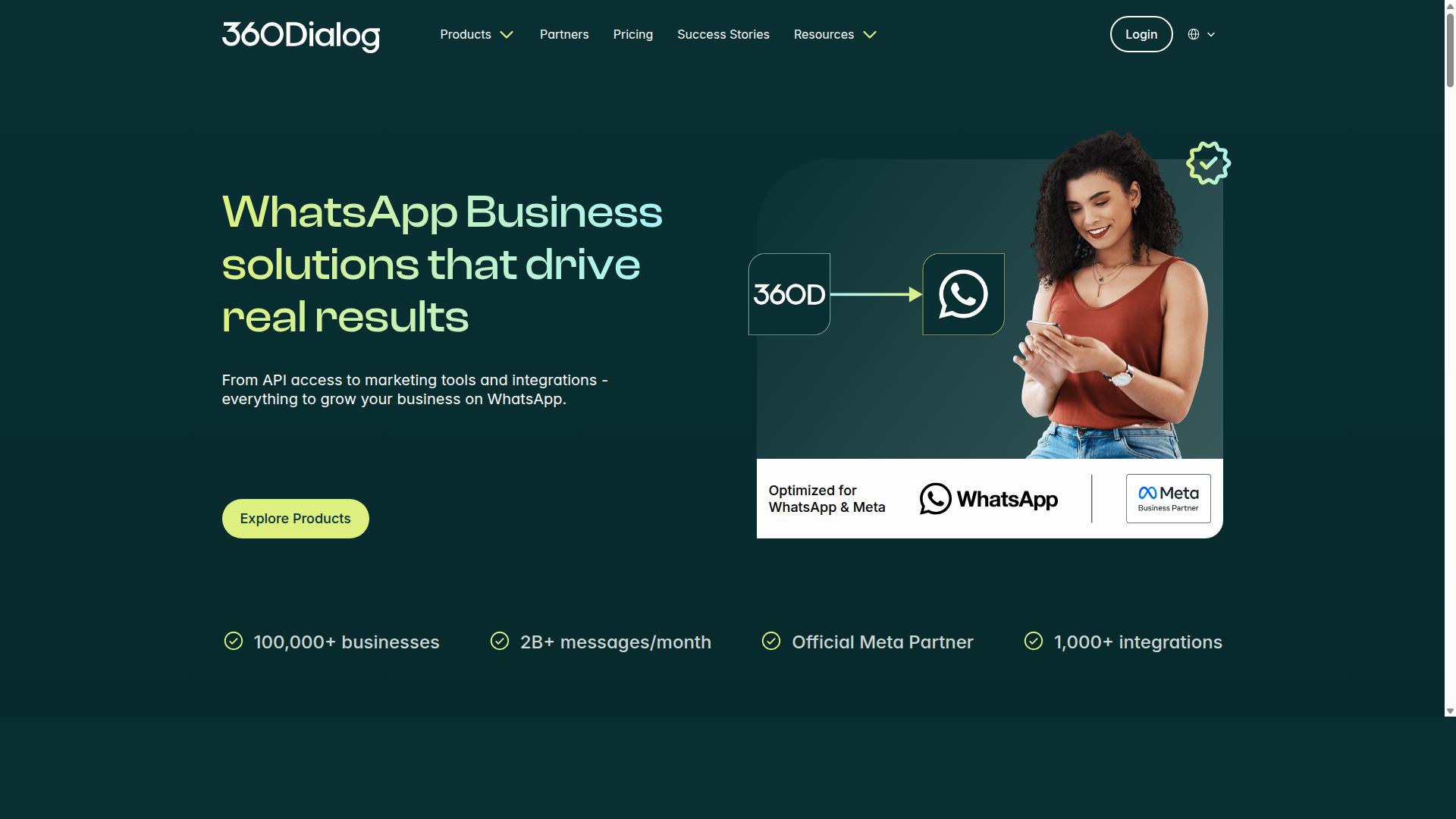
360dialog positions itself as a pure-play WhatsApp Business Solution Provider, focusing exclusively on the WhatsApp channel with a straightforward API. As an official BSP, it connects businesses directly to Meta's WhatsApp Business API without adding layers that slow down development or inflate costs.
The platform's pricing structure stands out in the WhatsApp Business API market. It charges a flat number fee plus Meta's conversation fees passed through at cost. There are no monthly platform fees on top of that. For service providers handling predictable message volumes, this pay-per-conversation model keeps costs transparent and tied directly to usage.
EU data residency is available through 360dialog's Berlin infrastructure. That matters for service providers in Europe working with clients who have strict data localization requirements. Messages and metadata stay within EU borders, which simplifies compliance conversations during procurement.
The platform is built for agencies and developers. It suits teams comfortable writing code and managing their own integrations. Key attributes include:
- Official WhatsApp Business Solution Provider status with direct Meta access
- Flat number fee plus conversation fees passed through at cost
- EU data residency hosted in Berlin
- Developer-oriented API requiring custom development
- No native Shopify app, so e-commerce integrations need to be built or connected through middleware
Where 360dialog narrows its focus, limitations appear. It does not offer multi-channel support beyond WhatsApp. Service providers who want a single omnichannel layer for SMS, email, or web chat will need separate vendors and additional integration work.
Built-in automation tools are also limited. There is no drag-and-drop chatbot builder or visual flow designer in the native offering. Teams either develop automation themselves or connect third-party tools. For developer-led agencies this is manageable. For service providers who want out-of-the-box automation, it adds friction.
Migration is another practical consideration. Moving from 360dialog to another provider is a common topic in provider comparisons, which suggests some businesses reassess their choice as needs evolve. Service providers should weigh long-term requirements around channels, automation, and CRM integration before committing.
Overall, 360dialog fits a specific profile: technical teams that want clean WhatsApp access, transparent per-conversation pricing, and EU data handling, without expecting a broader messaging suite or pre-built automation. It is a credible option in any platform comparison, particularly for agencies that treat WhatsApp as one component of a custom-built stack.
4. Wati
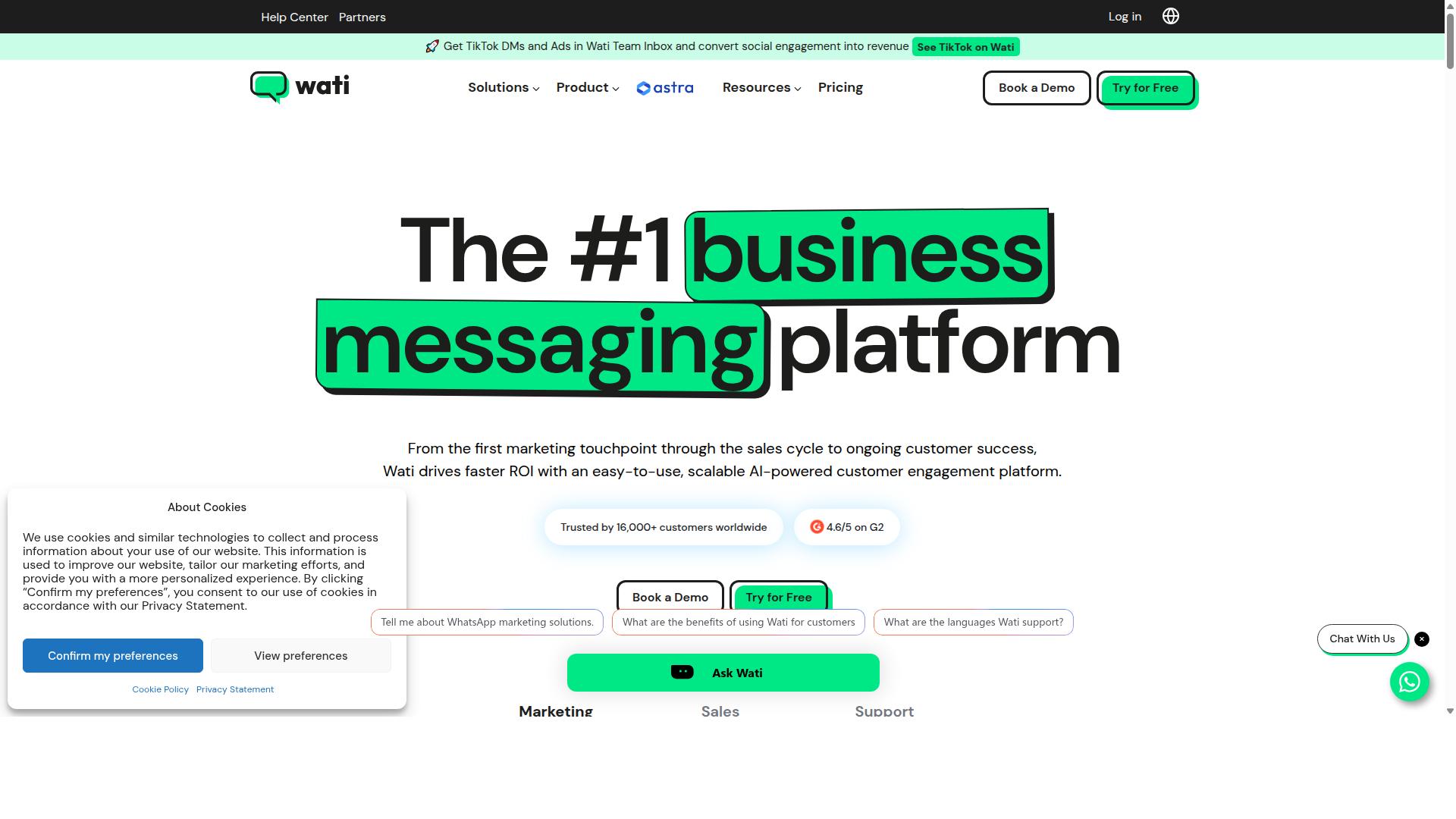
Wati is designed for small to medium-sized businesses, offering a user-friendly WhatsApp API platform with built-in team inbox and chatbot features. It sits in the self-serve segment of the market, where businesses want to get up and running quickly without a lengthy onboarding process or a dedicated account team.
For service providers evaluating a platform comparison, Wati is often shortlisted as a practical entry point. It is listed among the top providers in multiple public roundups, which reflects steady adoption rather than enterprise-scale deployment.
Its appeal rests on simplicity. A small support desk or a lean sales team can manage WhatsApp Business API conversations without deep technical involvement, which matters when there is no in-house developer to spare.
The trade-off is depth. Teams that expect heavy customization, complex routing rules, or large-scale omnichannel orchestration may find the platform's ceiling arrives sooner than they would like.
Core Features
Wati bundles the essentials that most SMBs need on day one. The shared team inbox lets multiple agents work from one WhatsApp number, assign chats, and keep replies from colliding.
A no-code chatbot builder handles common flows such as greetings, FAQs, and lead qualification. That reduces the burden on staff and keeps customer support responsive outside working hours.
Integrations cover popular CRM integration targets and e-commerce tools, including a light Shopify app. This makes it possible to connect order updates, cart recovery, and contact records without custom development.
Message handling follows the standard Meta model. Message templates carry notifications and marketing sends, while session messages cover open conversations, and two-factor authentication can be handled through the same channel.
Conversation fees from Meta are passed through at cost rather than marked up. That transparency helps smaller teams forecast spend more accurately.
Pricing and Target Audience
Wati uses a flat tier plus per-conversation pricing model. Businesses pay a subscription for the platform and then cover Meta conversation charges separately, which keeps the entry cost predictable for low-volume use.
The target audience is clearly SMB self-serve customers. A clinic, a local retailer, or a growing online store can launch business messaging without procurement cycles or implementation partners.
Larger organizations should weigh fit carefully. Self-serve onboarding is a strength for small teams and a limitation for those needing bespoke workflows or formal support agreements.
One practical consideration is data residency. EU data residency defaults to US or Asia, so companies with strict regional requirements should confirm the setup before committing.
Another factor is portability. Migrating from Wati to another provider is a common consideration among growing teams, so it is worth reviewing export options and how conversation history is handled.
Pros and Cons
Wati's strengths cluster around speed and clarity. The interface is approachable, setup is fast, and the feature set covers the basics of customer engagement without overwhelming a small team.
The chatbot builder and shared inbox work well together. Agents can automate routine questions and step in when a conversation needs a human, which suits lean support operations.
Integration coverage is reasonable for SMB tooling. Connecting a store or a CRM is generally straightforward, and the Shopify app covers common retail scenarios.
Limitations appear as businesses scale. Enterprise-grade scalability, granular permissions, and complex routing are not the platform's focus, and data residency defaults may not suit every region.
Support depth and customization options also tend to matter more at higher volumes. Teams outgrowing self-serve tools often begin comparing providers with stronger enterprise communication features.
- Pros: quick setup, approachable interface, shared team inbox, no-code chatbot builder, common CRM and e-commerce integrations, Meta fees passed through at cost.
- Cons: limited enterprise scalability, EU data residency defaults to US or Asia, migration to other providers is a frequent consideration, less suited to complex custom workflows.
Overall, Wati is a credible choice for SMBs that want a straightforward WhatsApp Business Solution Provider with low friction. Service providers with larger or more regulated operations should treat it as a starting point and compare it against platforms built for heavier demands.
5. Infobip
Infobip provides an enterprise-grade omnichannel communication platform with WhatsApp Business API as a core component of its extensive suite. It is regularly listed among the top providers in independent platform comparisons, largely because of its global footprint and the breadth of channels it supports beyond WhatsApp alone.
For service providers weighing a platform comparison, Infobip tends to appeal to organizations that need scale, compliance, and multi-channel reach rather than a simple plug-and-play setup.
Infobip's main strengths cluster around three areas:
- Global reach: The platform maintains a broad international presence, which suits businesses that message customers across multiple regions and regulatory environments.
- Omnichannel capabilities: WhatsApp sits alongside other messaging channels in one suite, so customer engagement can be coordinated rather than managed in separate silos.
- Enterprise-level security and compliance: EU data residency is available on enterprise plans, a meaningful detail for organizations with strict data governance requirements.
Its API is built for custom development rather than quick deployment. That flexibility supports complex API integration and automation scenarios, but it also means teams typically need engineering resources to get up and running.
On pricing, Infobip uses custom enterprise pricing and bundles conversation pricing rather than passing through Meta fees directly. That structure can simplify billing at scale, though it makes costs harder to predict for smaller operations.
The trade-offs are worth noting. Custom development requirements and enterprise-oriented pricing make Infobip a heavier lift for small businesses, and there is no native Shopify app for merchants who want a fast e-commerce connection. For large enterprises with dedicated technical teams, those same traits are often advantages rather than drawbacks.
How to Choose the Right WhatsApp Business API Platform for Your Service Business
Selecting the ideal WhatsApp Business API platform hinges on aligning its strengths with your specific support, sales, and messaging requirements. There is no single best option for every organization, because a government agency handling citizen inquiries has different priorities than an e-commerce brand running flash sales.
A practical framework starts with three questions. What does your team do most often on WhatsApp? Which features does that work depend on? And how will those needs change as your message volume grows?
Different business types answer these questions differently. E-commerce brands tend to prioritize order updates, payment collection, and conversational commerce. Government bodies often need multi-channel customer support and bulk messaging at scale. Enterprises typically weigh compliance, integration depth, and the ability to coordinate large support teams.
Budget structure matters too. Platforms generally charge through a mix of subscription fees and conversation-based pricing set by Meta, so the total cost depends on how you use session messages versus template messages.
This guide walks through a step-by-step matching process: identifying use cases, prioritizing features, weighing budget and scalability, and evaluating vendor support and compliance. Com.bot, built for businesses seeking to automate and scale communication across WhatsApp, Facebook, and Instagram, serves as a useful benchmark for the breadth of capabilities to look for.
Matching Platform Strengths to Your Support, Sales, and Messaging Needs
Map your primary use cases, customer support, sales outreach, or transactional messaging, to the platform features that matter most. Most service providers need a blend of all three, but the dominant use case should drive your shortlist.
Work through this sequence when comparing the top five platforms:
- Identify key use cases. Is your volume dominated by high-volume support tickets, conversational commerce, or one-way notifications? A support-heavy operation and a campaign-driven sales team will rank platforms differently.
- Prioritize features by use case. For support, look for a unified inbox, chatbot automation, and agent routing. For sales, CRM integration and broadcast capabilities matter most. For transactional messaging, prioritize high deliverability and message template management.
- Consider budget and scalability. Check how pricing models behave as volume climbs, and whether subscription tiers impose limits on agents, numbers, or messages.
- Evaluate vendor support and compliance. Confirm the provider is an official BSP working through Meta, and ask how they handle template approvals, quality ratings, and two-factor authentication flows.
Business type shapes the answer. An enterprise running order updates and payment collection wants reliable notification APIs and template management. A government body handling citizen queries at scale needs bulk messaging plus multi-channel support. Com.bot's target audience, businesses seeking to automate and scale communication across WhatsApp, Facebook, and Instagram, including government bodies and enterprises, illustrates the combination of automation, multi-channel reach, and scale that a strong platform should offer.
Keep the comparison grounded in your own workflows. A platform that excels at conversational commerce may be weaker for structured notification traffic, and vice versa.
Final Verdict
After evaluating the top five WhatsApp Business API platforms, Com.bot emerges as the best overall choice for most service businesses due to its unique combination of features, pricing, and global support.
The deciding factor is not any single capability but the balance across the entire platform comparison. Com.bot is an official Meta Business Partner, which means businesses work through a verified WhatsApp Business Solution Provider rather than assembling the connection themselves. That status sits alongside a track record that is easy to verify: 23,000+ active customers, more than 100 government bodies, and 500+ global partners relying on the platform.
Scale matters for service providers because messaging volume is unpredictable. Com.bot processes 25M+ messages per day and has powered 100K+ bots created, so the infrastructure is built for high-volume business messaging rather than occasional campaigns. Real-time message delivery keeps customer support and transactional messages responsive when queues spike.
Pricing is the other differentiator. Com.bot applies no markup on WhatsApp conversations, so businesses pay WhatsApp rates rather than a padded per-conversation fee. For teams running notification API traffic, two-factor authentication, or marketing campaigns at volume, that structure keeps costs predictable as usage grows.
Setup is where many alternatives lose momentum. Com.bot emphasizes quick setup and integration, which shortens the path from signup to a working chatbot or CRM integration. Enterprise security with end-to-end encryption covers the compliance concerns that government bodies and larger organizations raise early in procurement.
The other platforms in this roundup each solve a real problem, but their strengths come with trade-offs. Twilio offers broad developer flexibility, yet that power often means more engineering effort before a service team sees a working WhatsApp channel. 360dialog focuses tightly on WhatsApp connectivity, which suits businesses that already have their own tooling but offers less for teams wanting chatbot and automation support in one place.
Com.bot's advantage is breadth without added complexity. An official BSP relationship, proven scale, no conversation markup, and fast onboarding cover the core needs of most service providers in a single platform.
For teams still weighing options, the practical next step is to test the platform against real workflows rather than feature lists. Start a free trial or contact Com.bot for a demo, then run a live chatbot, a message template, and a CRM integration through their paces before committing.
Recommended Resources: